
Tomato Late Blight in July: How to Save Tomatoes from Fungus
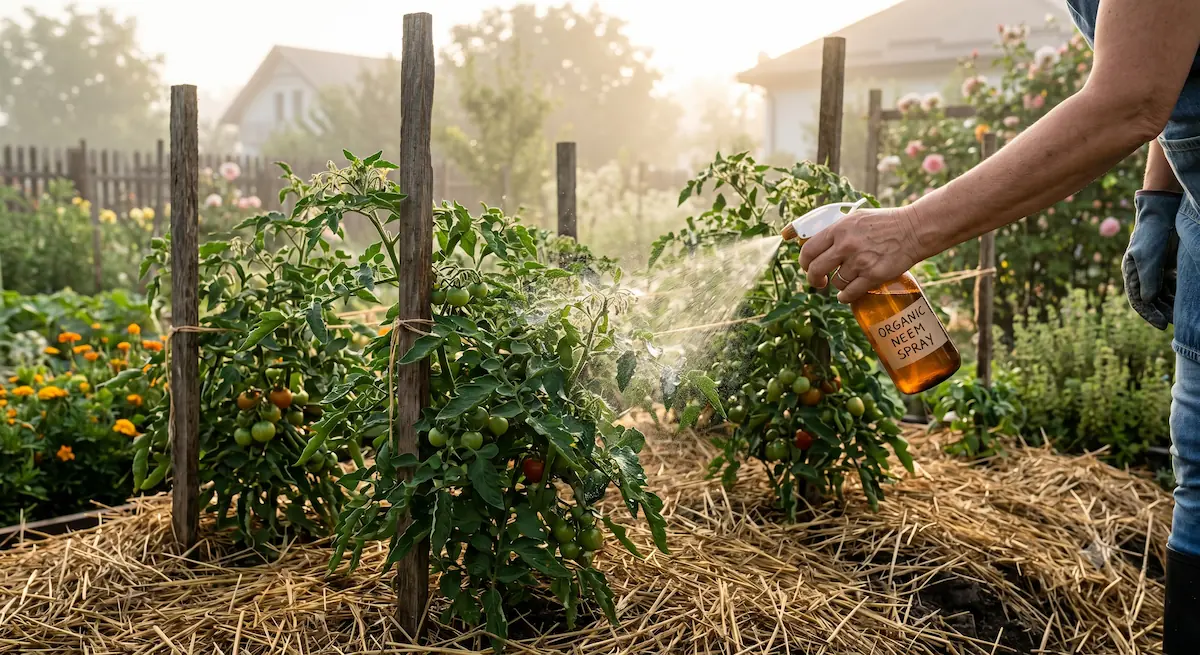
Summer mists and humidity trigger late blight outbreaks. Step-by-step manual on prevention and organic bio-protection of tomato beds.
Late blight (Phytophthora infestans) is the most destructive fungal disease, capable of turning a gorgeous tomato plantation into a scorched black wasteland within days. Most frequently, disease outbreaks hit during the second half of summer. The primary trigger is a combination of daytime heatwaves, cold night dews, and prolonged July mists. Saving your bushes is only possible by acting proactively.
1. How to Identify Late Blight Early On?
Initial symptoms emerge on lower leaves as dirty brown or grey spots that expand rapidly in size. Under high humidity conditions, a faint white downy coating appears on the underside of the leaf — these are fungal spores. If you fail to take action early, the disease migrates to stems and fruit, covering tomatoes with hard brown patches unpalatable for culinary use.
2. Prevention: Creating Adverse Environments for Fungus
Late blight fungus adores stagnant air and moisture. Therefore, the main task for a gardener is ensuring maximum ventilation inside every plant canopy. To ensure your bushes receive adequate airflow and light, combine them properly with neighbors as detailed in our corn shade wall tomato guide.
- Suckering and Pruning: Ruthlessly remove all lower leaves up to the first fruit cluster — they should never touch damp soil.
- Mulching: Always blanket the ground with a thick layer of dry straw to prevent soil-borne fungal spores from splashing onto leaves during irrigation.
3. Table of Organic Late Blight Management Methods (Good)
| Protective Remedy | How to Prepare and Apply? | Application Frequency in Summer |
|---|---|---|
| Fitosporin (Biofungicide) | Dilute per instructions, spray over foliage on cloudy days. Bacillus subtilis actively consumes fungal spores. | Every 10-12 days, mandatory after every rain event. |
| Milk Whey with Iodine | 1 liter of whey + 9 liters of water + 20 drops of iodine. Establishes a thin protective layer over leaves, stopping spores from germinating. | Once a week during periods of prolonged mists. |
| Garlic Infusion | Infuse 200 grams of crushed garlic in 10 liters of water for 24 hours, filter. Functions as a powerful natural antiseptic shield. | Once every 2 weeks for prevention. |
4. Major Mistakes to Avoid Under Fungal Pressure (Bad mistakes)
- Overhead watering (sprinkling): Watering tomatoes from above onto leaves in July is an open invitation for late blight. Water must be introduced strictly at root level.
- Leaving infected leaves in the garden: Pruned infected leaves should never be dropped under bushes or thrown into regular compost piles. They must be immediately burned or removed far from the plot.
AgroPlanner Tip: The most reliable protection is choosing resistant, early-maturing varieties (like cherry tomatoes) that completely finish production before heavy August mists set in. Use our planner to set up your preventive spray calendar!
AgroPlanner App
Realize your dream garden: check plant compatibility, sun/shade needs, and save your plan easily.

Disclaimer
Important! All information in this blog is for recommendation purposes only. We are developers and enthusiasts, not certified agronomists. Results may vary based on your region, soil type, and weather. We are not responsible for potential errors or crop failures. Please verify critical advice independently!
Found this helpful? Share with friends!
Read more
Corn: How to Grow a High Yield and Use It as a "Living Shield"
Secrets of growing corn: from choosing fertile soil to strategic companion planning. Learn why corn is the perfect partner for sunflowers and watermelons.
Read more →
Wheat: Gold on Your Plot
Spring wheat is the foundation of life. Learn how to sow spring wheat, why it protects soil from erosion, and which crops it pairs best with in rotation.
Read more →
The Slug War: 8 Humane and Effective Ways to Protect Your Garden
Slugs can destroy your cabbage seedlings or ruin sweet strawberries overnight. Learn how to use beer, coffee, and physical barriers to protect your beds without toxic chemicals.
Read more →