
Daffodils: How to Grow the Sun-Filled Symbol of Spring in Your Garden
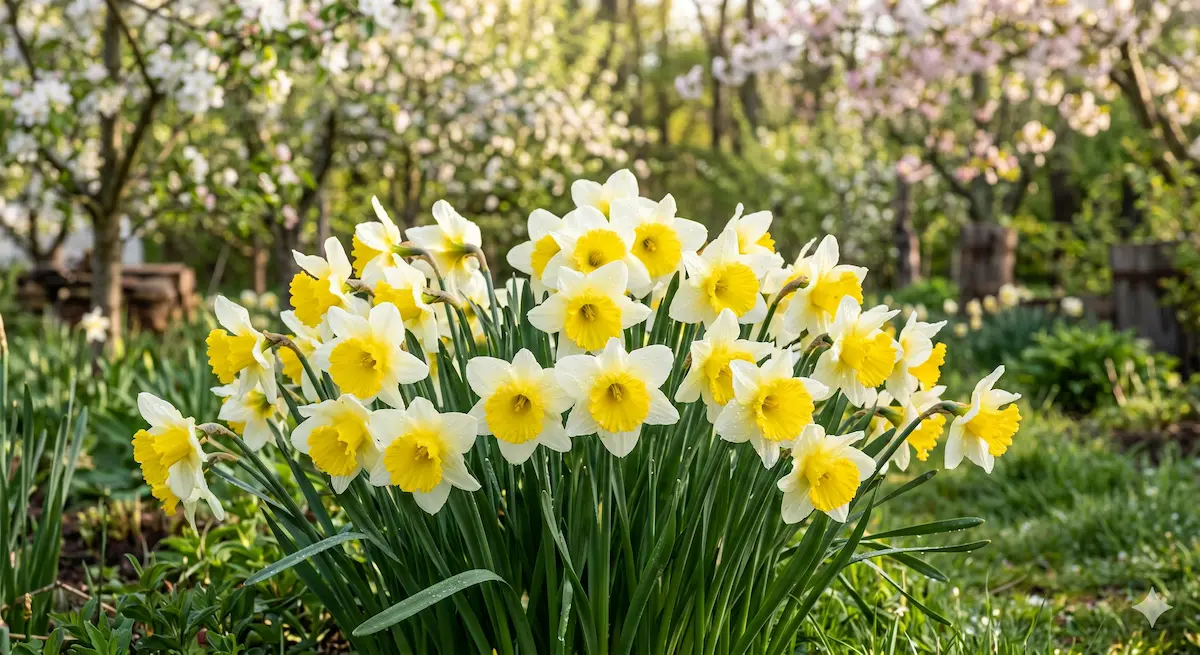
Daffodils are among the first flowers to bring warmth to the garden. Learn how to plant bulbs correctly, why they aren't afraid of rodents, and how to care for them after blooming.
The Daffodil (Narcissus) is a perennial bulbous plant that marks the true beginning of spring. Their main advantages are resilience and longevity: they can grow in one spot for over 5 years, forming lush flowering clumps. Furthermore, narcissus bulbs contain alkaloids that repel mice and moles, making them natural protectors of your flower bed.
Soil: Where Does the Daffodil Bloom Brightest?
Daffodils love fertile soil that retains moisture during the blooming period but doesn't turn into a swamp.
- Best Choice: Fertile Loamy soils (Type 1) or Sandy Loams (Type 2) with a neutral pH.
- Soil Check: Perform the sausage test. If the soil rolls into a flexible stick that cracks when bent (Type 1), it's ideal: the bulbs will get enough moisture in spring but won't rot in winter.
Best Companions (Good)
- Muscari and Crocuses: Together they create a vibrant spring carpet.
- Tulips: A classic pairing. Planting daffodils around the perimeter can help protect tulip bulbs from hungry rodents.
- Late-leafing Perennials (Hostas, Astilbes): As daffodils fade, the growing foliage of these perennials hides the drying bulb leaves, keeping the garden tidy.
Main Enemies (Bad)
- Walnut Trees: Walnut juglone is enemy number one. Under a walnut tree, daffodils quickly shrink and eventually stop blooming.
- Stagnant Water: Even brief spring flooding can lead to bulb loss.
- Fresh Manure: Like all bulbs, daffodils cannot tolerate fresh organics, as it triggers fusarium and other rots.
AgroPlanner Tip: The golden rule for daffodils: do not cut the leaves immediately after blooming! They must turn yellow naturally so the bulb can store energy for next year. In our app, a group of daffodils occupies a 1x1 grid. The system will check the shade level and definitely flag the walnut toxic zone in red.
AgroPlanner App
Realize your dream garden: check plant compatibility, sun/shade needs, and save your plan easily.

Disclaimer
Important! All information in this blog is for recommendation purposes only. We are developers and enthusiasts, not certified agronomists. Results may vary based on your region, soil type, and weather. We are not responsible for potential errors or crop failures. Please verify critical advice independently!
Found this helpful? Share with friends!
Read more
Planning a Perfect Garden from Scratch: A Step-by-Step Guide
Starting your first gardening season? This simple guide will help you create your dream garden without the stress.
Read more →
Panicle Hydrangea: Secrets to Lush Blooms and Choosing the Best Spot
Panicle hydrangea is a shrub that forgives beginners' mistakes but demands the right soil. Learn how to keep it blooming until the frost and find its perfect companions.
Read more →
What to Plant in September: The Autumn Wave of Fresh Greens
September is not the time to close the garden season. Guide to crops that can be sown in early autumn: fast greens, radishes, and winter onions.
Read more →