
Boxwood (Buxus): Secrets to Creating Perfect Living Topiaries
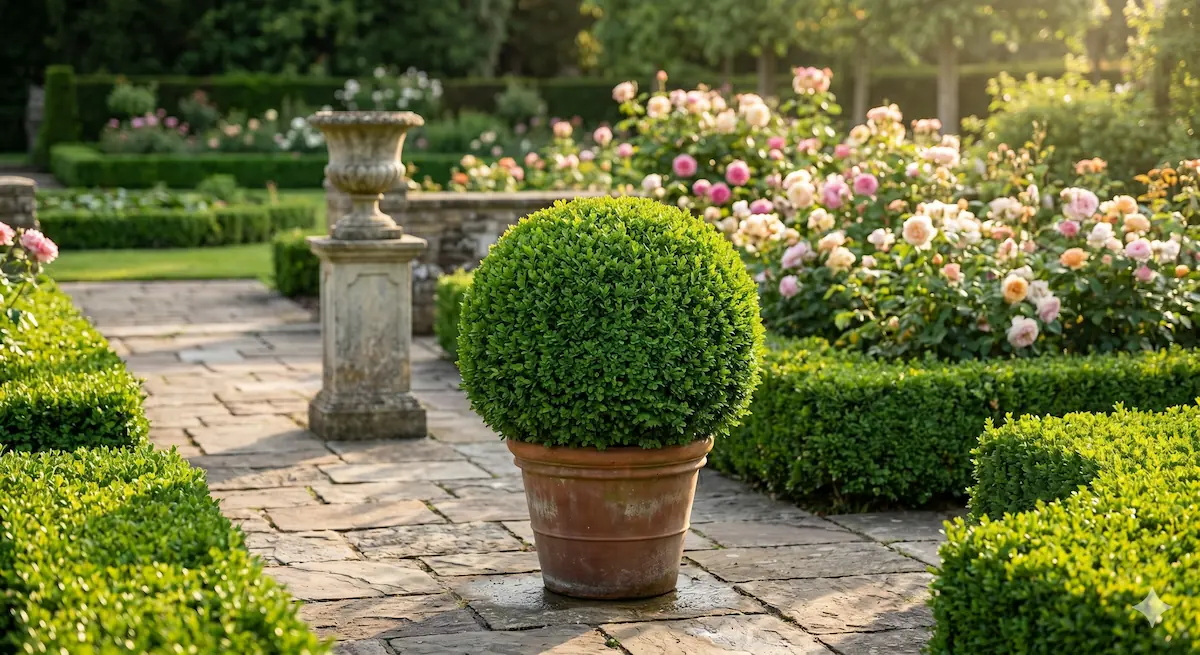
Boxwood is the king of landscape design. Learn why it fears the spring sun, what soil it needs, and which companions to plant for a luxurious composition.
Boxwood (Buxus) is an evergreen shrub prized for its small, dense foliage and its ability to hold any shape after pruning. It is the ideal plant for low borders and garden mazes. The main rule is patience, as boxwood grows only a few centimeters per year.
Soil: The Foundation for Longevity
Boxwood loves fertile, lime-rich earth. It cannot tolerate highly acidic soils or standing water at the roots.
- Best Choice: Fertile Loamy soils (Type 1) or Clay soils (Type 3) provided there is good drainage.
- Soil Check: Perform the sausage test. If the earth rolls into a solid ring (Type 3), it's good for stability, but adding sand to the planting hole is essential for drainage.
Best Companions (Good)
Boxwood is a perfect "frame" shrub that highlights the beauty of blooming plants:
- Roses: A classic pairing. Boxwood borders cover the base of rose bushes, creating a tidy, professional look.
- Lavender: Provides a stunning contrast in color and texture. If planning this duo, check out our lavender growing guide.
Main Enemies (Bad)
- Walnut Trees: The walnut's juglone acts as a slow poison for boxwood. Keep the shrubs well away from the walnut's root zone.
- Birch Trees: Competes for moisture, which boxwood may desperately lack during summer.
- Weeds: Due to its slow growth, young boxwood is easily overwhelmed by aggressive weeds.
AgroPlanner Tip: In our app, boxwood occupies a 1x1 grid for low borders. If you are looking for a taller hedge alternative, consider the Thuja Smaragd. Planner will help you calculate the planting distance so your shrubs eventually form a dense green wall.
AgroPlanner App
Realize your dream garden: check plant compatibility, sun/shade needs, and save your plan easily.

Disclaimer
Important! All information in this blog is for recommendation purposes only. We are developers and enthusiasts, not certified agronomists. Results may vary based on your region, soil type, and weather. We are not responsible for potential errors or crop failures. Please verify critical advice independently!
Found this helpful? Share with friends!
Read more
Ginger: How to Successfully Grow the Exotic Root at Home
Growing your own ginger is easier than it looks. Learn about its soil needs, why it fears direct sun, and which plants make its best companions.
Read more →
Summer Pruning of Fruit Trees: How to Remove Water Sprouts and Boost Yield
In July and August, trees actively push out energy-sucking water sprouts that shade ripening fruits. Learn the secrets of correct summer orchard pruning.
Read more →
How to Extend Cucumber Fruiting in August: Harvesting Until October
In August, due to cold nights and mists, cucumbers often stop growing. Learn the secrets of protecting vines and stimulating new ovaries in late summer.
Read more →