
Mustard in the Garden: How to Use the Ultimate Green Manure Correctly
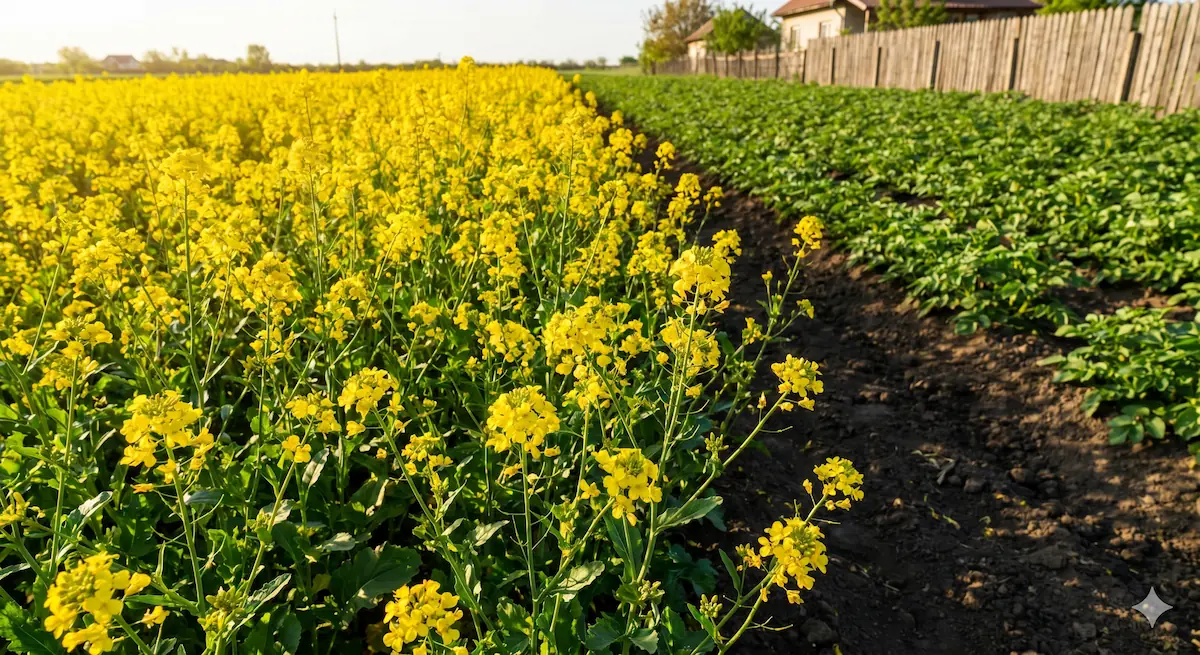
Mustard can heal the soil and repel pests, but it’s not suitable for all beds. Learn about companion rules and the secrets of using mustard as a fertilizer.
White mustard is a popular green manure. It grows fast, suppresses weeds, and sanitizes the soil. However, before sowing it everywhere, you need to know if it suits your soil type and who its neighbors are.
Benefits of Mustard
- Soil Sanitizer: Inhibits the development of scab and late blight.
- Pest Control: Wireworms and white grubs can't stand it.
- Green Fertilizer: After mowing, it becomes a rich source of nitrogen and phosphorus.
Soil Requirements and Compatibility
Mustard thrives best in Loamy soils (Type 1) or Sandy Loams (Type 2). If you have heavy clay, it won't be as effective. Be sure to perform a soil sausage test to confirm your type before planting.
Best Neighbors (Good): Potatoes, Grapes, and fruit trees.
Main Taboo (Bad): Never plant mustard near Cabbage, radishes, or turnips. They share common enemies like the flea beetle.
AgroPlanner Tip: In our app, mustard has its own soil code. If you try to place it next to a plant requiring a fundamentally different soil type (like peaty or chalky), the Planner will alert you to the mismatch. The system also highlights "red" zones near cabbage — don't ignore these alerts!
AgroPlanner App
Realize your dream garden: check plant compatibility, sun/shade needs, and save your plan easily.

Disclaimer
Important! All information in this blog is for recommendation purposes only. We are developers and enthusiasts, not certified agronomists. Results may vary based on your region, soil type, and weather. We are not responsible for potential errors or crop failures. Please verify critical advice independently!
Found this helpful? Share with friends!
Read more
Currants in May: How to Ensure a Rich Berry Harvest
Spring care for black and red currants. AgroPlanner tips on fertilizing, pest protection, and correct watering during blooming.
Read more →
Cucumber Companions: Double Your Yield with Proper Planning
Cucumbers love company, but not just any. Find out who helps cucumbers climb up and who "steals" all the water in the garden bed.
Read more →
Tomato Late Blight in July: How to Save Tomatoes from Fungus
Summer mists and humidity trigger late blight outbreaks. Step-by-step manual on prevention and organic bio-protection of tomato beds.
Read more →